
Fence Gate Hardware: Choosing Hinges and Latches That Last in DFW
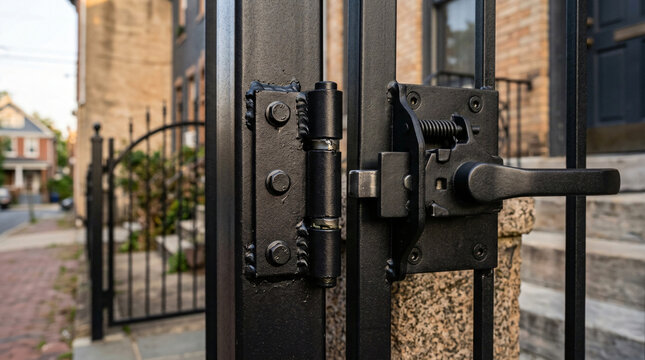
Gate hardware is one of those details that's easy to overlook until it fails — a sagging gate, a latch that won't catch anymore, or hinges that rust through much faster than expected. If you've searched "fence gate hardware options," you've probably already run into one of these frustrations, or you're trying to avoid them before your new fence goes in.
At B.A. Concrete & Roofing, gate hardware selection is part of every fence installation project we complete throughout DFW and Johnson County, and it's a detail we take seriously, since it's often the difference between a gate that lasts as long as the rest of the fence and one that becomes a recurring headache within just a year or two.
Why Gate Hardware Matters More Than Homeowners Expect
A gate is, without question, the most frequently used part of any fence. While fence panels and posts largely just stand in place year after year, a gate opens and closes repeatedly — sometimes multiple times a day for a backyard gate used by kids and pets, or less frequently but under heavier loads for a large driveway gate.
This constant mechanical use means gate hardware experiences a level of wear and stress that the rest of the fence simply doesn't. Lower-quality hardware often fails well before the fence panels themselves show any signs of aging, which is exactly why this detail deserves more attention than it typically gets.
Types of Gate Hinges
Standard Strap Hinges
A common, functional option for most residential gates, strap hinges attach along the length of the gate frame and post, providing solid support for everyday use on lighter to moderate-weight gates.
Self-Closing Hinges
These hinges are spring-loaded to automatically swing the gate shut after it's opened, which is particularly important for pool fencing, where safety codes commonly require self-closing mechanisms to prevent a gate from being accidentally left open.
Heavy-Duty Hinges
Recommended for larger or heavier gates — including custom metal gate designs, wider driveway gates, or gates supporting additional weight from decorative elements — heavy-duty hinges are built to handle loads that standard hardware simply isn't rated for.
Adjustable Hinges
Some hinge designs allow for minor adjustments after installation, helping correct slight sagging over time without requiring a full hardware replacement — a useful feature, particularly for heavier gates that may settle slightly after initial installation.
Types of Gate Latches
Standard Gravity Latches
Simple and effective for everyday residential use, gravity latches rely on a basic mechanism that catches when the gate swings closed, requiring no special action from the user beyond pushing the gate shut.
Self-Latching Mechanisms
Often paired with self-closing hinges, self-latching mechanisms automatically secure the gate once it swings shut, without requiring the user to manually engage the latch. This combination is frequently required for pool fencing due to the safety benefits.
Keyed or Locking Latches
For gates requiring restricted access — whether for security purposes, child safety, or simply keeping a gate secured when not in active use — keyed or combination locking latches add an additional layer of control beyond a standard catch mechanism.
Two-Way or Double-Sided Latches
Useful for gates that need to be operated from both sides, these latches allow access without requiring a key or code from either direction, though they don't offer the same security as a locking option.
How Gate Weight Affects Hardware Choice
One of the most common causes of premature hardware failure is a mismatch between the gate's actual weight and the hardware rated to support it. Heavier gates — particularly custom metal designs, wider gates, or those with added decorative elements — put significantly more strain on hinges than a standard lightweight wood picket gate.
Using standard, lightweight hardware on a heavy gate is one of the most frequent and preventable causes of sagging, hinge failure, or a gate that gradually pulls away from its post over time. This is why it's worth discussing your gate's actual weight and construction honestly with whoever is installing the hardware, rather than defaulting to whatever hardware happens to be on hand.
Material Considerations for Hardware Durability
Stainless Steel Hardware
Generally offers the best rust resistance of common hardware materials, making it a strong choice for DFW's humid conditions, though it typically comes at a higher price point than standard steel.
Galvanized Steel Hardware
A more budget-friendly option that still offers meaningfully better rust resistance than untreated steel, galvanized hardware strikes a reasonable balance between cost and durability for many residential applications.
Standard (Untreated) Steel Hardware
The least expensive option, but also the most vulnerable to rust and corrosion, particularly in a climate like DFW's, where humidity and seasonal rain create consistent moisture exposure.
Given how much more frequently gate hardware experiences use compared to other fence components, investing in rust-resistant materials for hinges and latches specifically — even if the rest of your fence uses more standard materials — is often a worthwhile trade-off.
Signs Your Gate Hardware Needs Replacing
- Visible rust or corrosion developing on hinges or latches, particularly at moving joints where friction and moisture combine to accelerate wear
- A gate that sags or no longer closes evenly, often indicating hinge wear, loosening, or a mismatch between hardware capacity and gate weight
- A latch that requires excessive force to engage, suggesting either misalignment from a sagging gate or wear within the latch mechanism itself
- Squeaking or grinding sounds during regular use, typically pointing to hinge wear or a lack of lubrication, though persistent noise despite maintenance can indicate it's time for replacement
Why Gate Hardware Problems Often Aren't Really About the Hardware
It's worth noting that many gate hardware "failures" actually trace back to an underlying issue with the gate or post itself, rather than the hardware being inherently defective. A shifted or settling post can throw off gate alignment in a way that makes even quality hardware struggle to function properly. Before replacing hardware outright, it's worth confirming whether the actual problem is the hardware, the gate's alignment, or the stability of the post it's attached to.
Tips Before Choosing Gate Hardware
- Match hardware weight rating to your specific gate's actual weight, rather than assuming standard residential hardware will be sufficient for a heavier custom design
- Choose self-closing, self-latching hardware for any pool-adjacent fencing, both for safety compliance and peace of mind
- Opt for rust-resistant materials given DFW's humidity, even if it means a slightly higher upfront cost for the hardware specifically
- Don't default to the cheapest hardware option, since gate hardware sees constant use and is one of the areas where cutting corners tends to show up as a problem fairly quickly
- Consider adjustable hinges if you want the ability to make minor corrections down the road without a full hardware replacement
Why Homeowners Trust Our Fence Installation Team
With over 15 years of experience, our in-house team installs fencing and gates throughout DFW and Johnson County with hardware selected specifically for durability and long-term performance — not just whatever happens to be the least expensive option available. We take the time to match hardware to each gate's actual weight, use case, and exposure to the elements.
Ready to Install a Gate Built to Last?
Whether you're installing a new fence with a gate or upgrading the hardware on an existing one, choosing the right hinges and latches upfront saves you from dealing with a sagging, sticking, or failing gate down the road.

Ready to install a gate built to last? Get your free estimate here.