
Metal Building Ventilation: Why It Matters in Texas Heat
A metal building can turn into an oven during a Texas summer if ventilation isn't planned properly from the start. Homeowners and business owners searching "metal building ventilation options" are usually trying to avoid two common problems: excessive heat buildup and condensation forming inside the structure.
At B.A. Concrete & Roofing, we build metal structures throughout DFW and Johnson County, and ventilation is one of the details we walk through with every property owner before construction begins — not something added as an afterthought.
Why Ventilation Matters So Much in Metal Buildings
Metal conducts and radiates heat far more than wood-frame construction, which means an unventilated metal building can reach uncomfortable, even unsafe, interior temperatures during Texas summers. Beyond comfort, poor ventilation also contributes to condensation problems, which can lead to rust, mold, or damage to anything stored inside.
Common Problems Caused by Poor Ventilation
- Excessive heat buildup, making the space unusable for much of the day during summer
- Condensation forming on the interior surface of the metal, especially during temperature swings between day and night
- Musty odors or mold growth from trapped moisture
- Rust developing on metal surfaces or stored equipment due to persistent moisture
- Reduced comfort for anyone using the space as a workshop or living area
Common Metal Building Ventilation Options
Ridge Vents
Installed along the peak of the roof, ridge vents allow rising hot air to escape naturally, making them one of the most effective passive ventilation options for metal buildings.
Gable Vents
Positioned on the gable ends of the structure, these vents allow airflow in and out, helping create natural cross-ventilation when combined with other vent types.
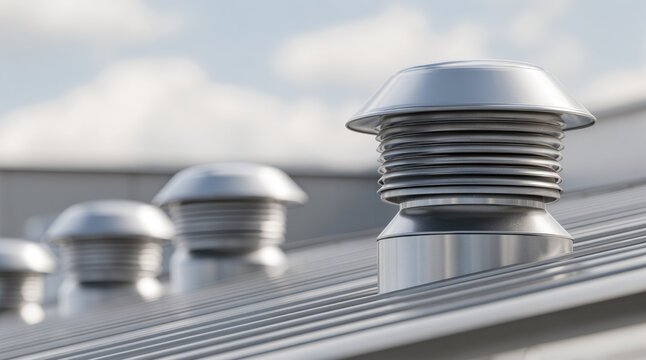
Turbine Vents
Wind-powered rotating vents that pull hot air out of the building passively, without requiring electricity, making them a popular low-maintenance option.
Powered Exhaust Fans
For buildings used as workshops or spaces requiring more active temperature control, powered fans can supplement passive ventilation, especially during the hottest parts of the year.
Louvered Vents
Often used in combination with other vent types, louvered vents allow airflow while helping keep out rain and debris.
Insulation and Ventilation Work Together
Ventilation alone doesn't solve every heat and moisture issue — insulation plays a major role too. A well-insulated building reduces how much heat transfers through the metal in the first place, while proper ventilation removes the heat and moisture that still builds up inside. The two work best as a combined strategy rather than relying on just one.
How to Determine the Right Ventilation for Your Building
- Intended use — a workshop or space with regular occupancy needs more active ventilation than basic storage
- Building size — larger structures often require multiple ventilation points to maintain consistent airflow
- Insulation level — a well-insulated building may need less aggressive ventilation than an uninsulated one
- Local climate exposure — a building in a more open, sun-exposed area may need additional ventilation compared to one with natural shade
Signs Your Metal Building Doesn't Have Enough Ventilation
- Interior temperatures feel dramatically hotter than outside conditions
- Visible condensation on the interior metal surfaces, especially in the mornings
- A persistent musty or damp smell inside the structure
- Rust developing on interior metal surfaces or stored items despite no direct water exposure
Tips Before Finalizing Your Metal Building Design
- Discuss intended use with your contractor so ventilation is planned around how the space will actually be used
- Ask about combining passive options (ridge vents, gable vents) with active solutions (fans) for the best results
- Consider insulation alongside ventilation rather than treating them as separate decisions
- Don't treat ventilation as an optional upgrade — retrofitting it after construction is often more difficult and costly than planning for it upfront
Why Planning Ventilation Early Saves Money Later
Adding proper ventilation during initial construction is almost always more cost-effective than retrofitting vents into an already-completed structure. Getting this right from the start avoids the discomfort, moisture issues, and potential equipment damage that come from an underventilated building.
Why Property Owners Trust Our Metal Building Team
With over 15 years of experience, our in-house team designs metal buildings throughout DFW and Johnson County with proper ventilation planned in from the beginning, based on how each property owner actually intends to use their space.
Planning a Metal Building Project?
Whether it's a workshop, storage building, or agricultural structure, proper ventilation planning makes a real difference in comfort, durability, and long-term maintenance.

Ready to plan your metal building the right way? Get your free estimate here.