
Retaining Wall Site Prep: Why Grading Comes First in DFW
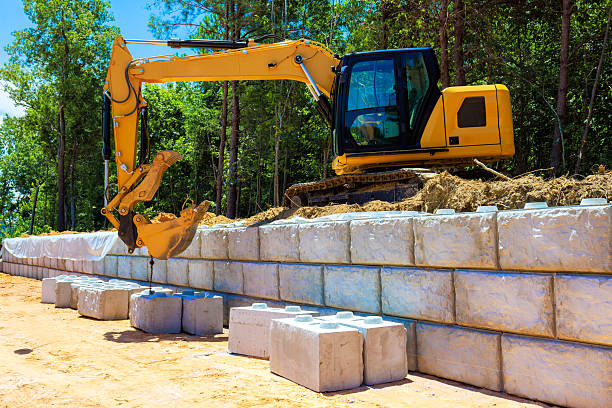
A retaining wall is only as reliable as the ground it's built to manage. It's easy to think of a retaining wall project as simply "building a wall," but the wall itself is really just the visible end result of a process that starts well before any blocks or poured concrete go into place. Property owners searching "retaining wall site prep DFW" are usually starting to realize that what happens beneath and behind the wall matters just as much as the wall's construction itself.
At B.A. Concrete & Roofing, retaining wall site preparation is one of the more technically important phases of these projects throughout DFW and Johnson County, and it's a step where cutting corners tends to show up as a costly problem years down the road rather than an immediate, obvious issue.
Why Site Prep Matters So Much for Retaining Walls
A retaining wall exists for one core purpose: to hold back soil and manage a change in grade, whether that's a sloped backyard, a raised planting bed, or a larger landscape feature. This means the wall is under constant, ongoing pressure from the soil it's retaining — pressure that doesn't let up once construction is finished, but continues indefinitely as long as the wall stands.
Because of this ongoing pressure, proper site preparation isn't just a nice-to-have step that improves the wall's appearance or makes construction easier — it directly determines whether the wall will actually perform its intended function for years or even decades, or whether it will begin to fail within a much shorter timeframe.
This reality is amplified significantly in DFW, where expansive clay soil adds extra stress to any structure managing a grade change, making the site prep phase even more consequential than it might be in a region with more stable soil conditions.
What's Involved in Retaining Wall Site Prep
Excavation
The process begins with removing soil to create the proper base and backfill area for the wall. This isn't simply digging a trench — the excavation needs to account for the wall's footing requirements, the space needed for proper backfill material behind the wall, and the specific engineering requirements based on the wall's height and the amount of soil it will be retaining.
Grading
Establishing the correct slope and elevation changes that the wall will ultimately manage. This step requires understanding not just where the wall itself will sit, but how the surrounding grade transitions into and away from the wall, ensuring the finished landscape functions cohesively rather than creating awkward transitions or unintended drainage issues elsewhere on the property.
Drainage Planning
Arguably the single most important element of retaining wall site prep, drainage planning determines how water moving through the soil behind the wall will be managed, preventing the kind of water buildup that causes the majority of retaining wall failures over time.
Base Compaction
Ensuring a stable foundation for the wall itself, properly compacted base material prevents uneven settling that could compromise the wall's structural integrity or create visible shifting and cracking over time.
Why Drainage Is the Most Important Factor in Retaining Wall Success
If there's one single factor that separates a retaining wall that performs well for decades from one that fails within just a few years, it's drainage. Without a way for water to escape from behind the wall, hydrostatic pressure — the force created by water accumulating and pushing against the wall's back surface — builds up steadily over time.
This buildup of pressure is patient and relentless. It doesn't announce itself with an immediate, obvious failure; instead, it gradually stresses the wall structure until eventually, often after a period of heavy rain or repeated wet-dry cycles, the wall begins to bulge, crack, or in more severe cases, fail outright.
How Proper Drainage Prevents This
Proper drainage planning typically involves several coordinated elements:
- Backfill material selection — using appropriately permeable material immediately behind the wall, rather than the same dense, water-retentive clay soil that's common throughout much of the surrounding property
- Drainage pipe or gravel channels — creating an intentional path for water to travel down and away from the wall structure, rather than accumulating against it
- Weep holes or outlets — providing points where accumulated water can actually exit the wall system, preventing pressure buildup
- Surface water management — ensuring water on the surface above the wall is directed away rather than allowed to saturate the soil directly behind the structure
How DFW's Soil Affects Retaining Wall Projects
North Texas's clay soil is known for its dramatic expansion when wet and contraction when dry — a cycle that repeats seasonally and sometimes even within shorter timeframes depending on rainfall patterns. This constant movement creates unique challenges for retaining walls in this region compared to areas with more stable, consistent soil types.
Why This Matters for Wall Design
A retaining wall in DFW needs to be engineered with this soil behavior specifically in mind — not simply built using a generic design template that might work perfectly well in a region with sandy or rocky soil. The pressure calculations, backfill material choices, and drainage design all need to account for how aggressively this particular soil type expands and contracts.
Why This Matters for Site Prep Specifically
Beyond the wall's engineering itself, the site prep phase needs to account for this soil behavior as well. Excavation and grading decisions made without considering how the surrounding clay soil will behave over time can undermine even a well-engineered wall design, since the ground the wall sits on and interacts with is just as important as the wall structure itself.
Common Site Prep Mistakes That Lead to Wall Failure
Inadequate Drainage Behind the Wall
By far the most common cause of retaining wall failure, insufficient or improperly designed drainage allows water pressure to build steadily until the wall eventually can't withstand the force.
Insufficient Excavation Depth for the Wall's Footing
A wall's footing needs to be set at an appropriate depth to provide adequate support, and shortcuts taken during excavation can leave a wall without the stable base it needs to resist the ongoing pressure from retained soil.
Poor Soil Compaction Before Construction Begins
Both the base beneath the wall and, in some cases, the surrounding graded areas need proper compaction to prevent uneven settling that can compromise the wall's stability over time.
Ignoring the Specific Soil Composition of the Site
Every property's soil can behave somewhat differently even within the same general region, and failing to account for a specific site's particular characteristics — moisture retention, drainage patterns, existing grade — can lead to a wall design that doesn't quite fit the reality of that specific location.
Why Site Prep Should Never Be Rushed
Because a retaining wall's job is to manage ongoing, continuous soil pressure rather than a one-time load, cutting corners on the invisible groundwork beneath it often leads to expensive failures years down the road — failures that proper preparation would have prevented entirely from the start.
This is part of what makes retaining wall projects tricky to evaluate for homeowners comparing quotes: the visible wall itself might look identical between two competing bids, but the site prep work happening beneath and behind it — the part nobody sees once construction is complete — can differ dramatically in quality and long-term reliability.
Signs of Retaining Wall Failure Related to Poor Site Prep
- Bulging or leaning in the wall's face, often indicating pressure buildup from inadequate drainage
- Cracking, particularly horizontal cracks that suggest structural stress from soil pressure
- Visible water pooling at the base of the wall or seeping through the wall's face, indicating drainage isn't functioning as intended
- Soil erosion around or behind the wall, sometimes indicating water is finding an unintended path around the drainage system
What Proper Site Prep Costs vs. What Wall Failure Costs
While thorough site preparation — proper excavation, drainage installation, and compaction — does add cost and time to a retaining wall project, this investment is almost always dramatically less expensive than dealing with a failed wall down the road. Wall failure typically requires not just rebuilding the wall itself, but often addressing soil erosion, water damage to surrounding landscaping or structures, and sometimes even foundation-adjacent issues if the wall was retaining soil near a home.
Tips Before Starting a Retaining Wall Project
- Ask your contractor specifically how drainage will be addressed behind the wall, rather than accepting a vague assurance that "it's included" without understanding the actual approach
- Confirm soil assessment has been done for your specific property, since soil conditions can vary even within the same general area
- Discuss excavation depth and base preparation before construction begins, understanding what's actually happening beneath the visible portion of the wall
- Choose a contractor with experience specifically in DFW's clay soil conditions, since general retaining wall experience elsewhere doesn't necessarily translate to understanding this region's particular challenges
- Ask to see examples of previous retaining wall projects, ideally ones that have been in place for several years, as a way of gauging real-world performance rather than just initial installation quality
Why Homeowners Trust Our Site Prep and Retaining Wall Team
With over 15 years of experience, our in-house team handles site prep and grading throughout DFW and Johnson County with the specific demands of retaining wall projects in mind — treating drainage planning and proper excavation as essential components of the project, not optional upgrades.
Planning a Retaining Wall Project?
Whether you're managing a sloped backyard, creating a raised planting area, or addressing an erosion issue, understanding what happens beneath the surface is just as important as choosing the wall's visible design and materials.

Planning a retaining wall project? Get your free estimate here.